Brake pads squeal, you Google "brake job cost near me," and the number that comes back makes you want to just live with the noise a little longer. Here's the thing: the pads themselves usually run somewhere between forty and eighty bucks a set for most daily drivers. What you're actually paying for at a shop is labor, and brake jobs sit near the top of the list for marked-up labor items.
A front and rear pad swap takes an experienced tech under an hour once the car's on a lift. Shops don't bill for the actual minutes, though. They bill off a flat-rate labor guide, and that guide tends to round generously in the shop's favor.
Here's what a shop actually charges
We laid out the real math on our Do the Math section. A typical 3-hour brake job at a traditional shop breaks down to a $95 diagnostic fee, $390 in labor at $130 an hour, $90 in parts markup, and $25 in shop supplies. Add it up and you're at $600 before you've even picked out a pad brand.
What you pay in one of our bays
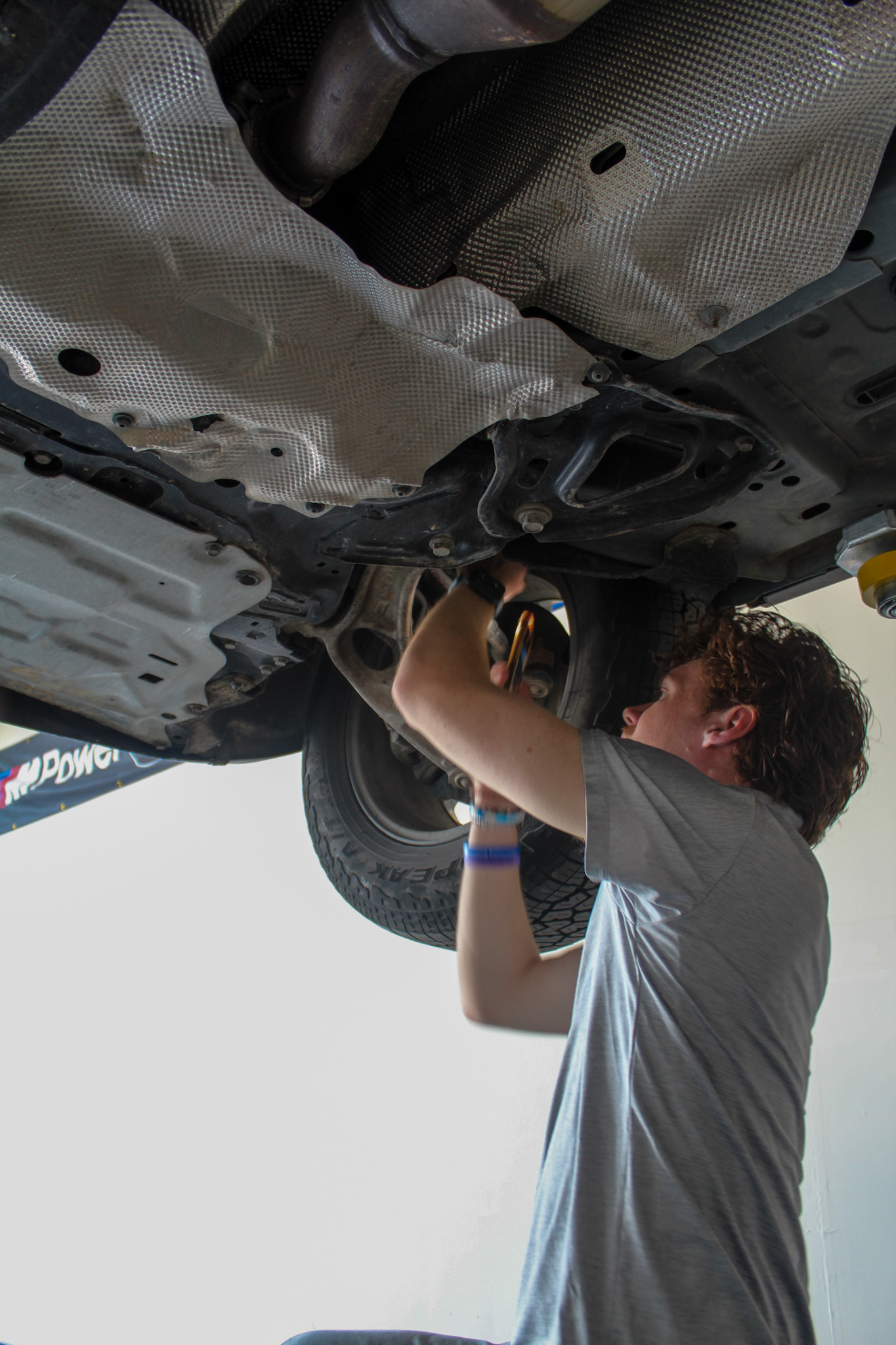
Rent a bay and lift at Hafen's for that same 3 hours and the total comes to $150. No diagnostic fee, because you already know what's making the noise. No parts markup, because you bring your own pads and rotors. The 1,000+ tools in the shop are already covered by the hourly rate, so you're not renting a torque wrench on top of the bay. Book a bay in Provo or West Valley City and you can be under the car within the hour. Both locations are open 24/7, so a 6am job before work or a midnight one after your shift both work.
The tools you'll actually reach for
A brake job doesn't take much, which is part of why it's a solid first repair to try yourself. You'll want a 3-ton floor jack and a jack stands set to get the car up and keep it up (never trust a jack alone, that's exactly what the lift and stands are for). A 24 in. breaker bar handles lug nuts an impact gun torqued on a little too enthusiastically last time. And an 18 in. torque wrench matters more than people give it credit for. Guessing at lug nut torque is how you warp a rotor, or worse, work a wheel loose down the road. All of it's already sitting in the tool inventory, along with whatever sockets and wrenches your caliper bolts need.
This math holds whether you're driving in from Orem or coming over from Magna. We've got a bay in Provo for Utah County and one in West Valley City for Salt Lake County, so you're not driving across the valley just to save the labor bill. And if you live in an apartment or don't have a garage, that's honestly the bigger reason most people end up here. There's nowhere to jack a car up safely at a lot of complexes, let alone leave it up on stands overnight.
Before you get on the lift
Every first-time visitor has to watch a short safety training video before using the lift. No exceptions, and no staff standing over your shoulder walking you through the repair itself, so you should already know how to do the job before you book. If you're not sure whether something like bleeding the brake lines is within your skill level, figure that out before you're on the clock, not after. Bring your own pads and rotors (we don't sell parts), and check the FAQ page if you're wondering about extending your session or what happens if the job runs long.
One tip that saves people money down the line: skip the cheapest pads on the shelf. Bargain-bin pads squeal within a few thousand miles, and you'll be back under the car sooner than planned, paying for another session you didn't need yet. Spend the extra fifteen bucks on a mid-range ceramic set and you probably won't think about your brakes again for another couple years.