An oil change is the cheapest repair you'll ever talk yourself out of doing. Everybody basically knows how it works: drain the old oil, swap the filter, pour in the new stuff, done. The part that actually stops people isn't the wrench work. It's what you're supposed to do with four or five quarts of used motor oil once it's out of the pan.
That's the whole problem, honestly. Not the mechanics of it.
The mess is the reason shops exist
Quick lube places built a business around solving a problem you can solve yourself for the price of a drain tank and twenty minutes on a lift. There's not much skill involved. You're mostly paying someone else to deal with the used oil and to sit in their lobby while they do it.
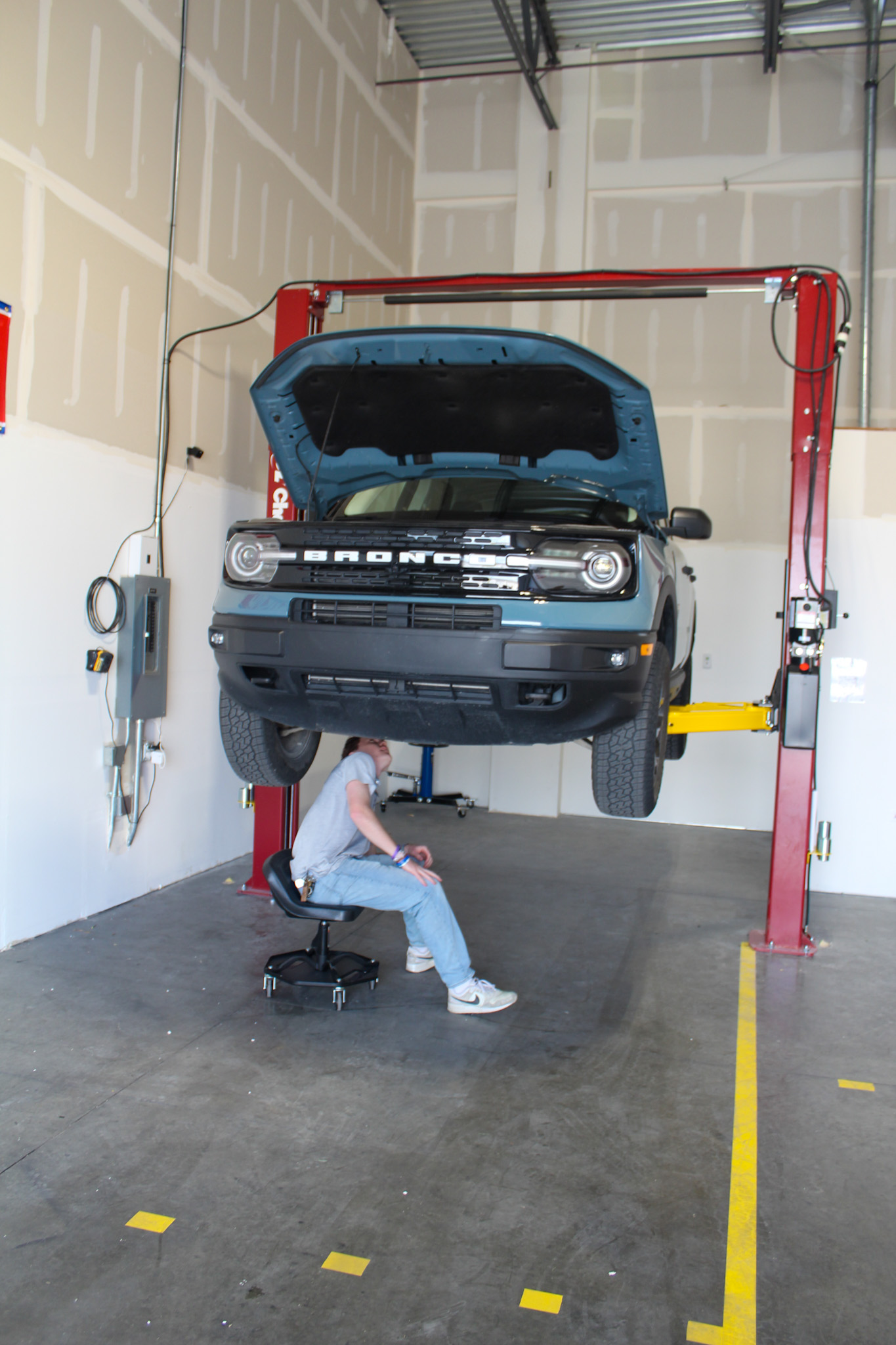
What it costs in one of our bays
Bring your own oil and filter, that part's on you no matter where you go. What changes is the labor and the fees stacked on top of it. Our bays run on the same hourly model as every other repair here: no diagnostic fee, no shop supply charge, no marked-up filter because a tech grabbed one off the shelf. We laid out the math for a bigger job on the Do the Math section: a lift bay is a flat $50 an hour (a floor space is $25), so a 3-hour job runs $150. This job eats a fraction of that time, so plan on paying a fraction of the price. Even a slow, first-timer pace fits comfortably inside an hour.
The tool that actually matters here
The 20-gallon oil drain tank is the real reason to do this in a bay instead of your driveway. Roll it under the pan, pull the plug, and the used oil goes straight into a tank built to hold it instead of a repurposed jug riding in your trunk for a week until the auto parts store takes it. Grab what you need from the full tool inventory to get the car up safely too: a 3-ton floor jack and a jack stands set, because a jack by itself holding a car up while you're underneath it is how people get hurt. An 18 in. torque wrench keeps you from overtightening the drain plug on the way back down, which is a more common mistake than you'd think and a genuinely annoying one to fix once you've stripped the pan threads.
Before you book
First visit means watching the required lift safety training video before anyone gets near the lift. No exceptions there, and no attendant walking you through the repair step by step once you're on the clock, so know your filter type and torque spec going in. Not sure whether you can add time if you run slower than planned? Check the FAQ page, you can usually extend a booking as long as nobody's reserved the bay right after you.
It's also a decent warm-up job before you try something bigger. First time on a lift, an oil change teaches you the basics, positioning the car, finding the drain plug, getting a feel for how the lift raises and settles, without the pressure of a repair you can't put back together wrong. Both locations, Provo and West Valley City, run 24/7, so there's nothing stopping you from knocking it out at 6am before work if that's the only free hour you've got.
One thing worth doing differently than a shop would: check your other fluids and swap the cabin air filter while the car's already up. You're paying for the bay time either way, so use it. Ten extra minutes under the hood beats driving back next month for something you could've handled today.