Call a shop in Provo or West Valley City for a quote and you'll usually hear two numbers before you hear anything about your actual car: a diagnostic fee, then an hourly labor rate. Around here that labor rate typically lands somewhere near $130 an hour, and it starts the second a tech opens the hood, not when the real work begins. Add a parts markup on top of that and a routine brake job turns into a $600 receipt for a job that takes most people under three hours to do themselves.
That gap is why the DIY bay model has caught on with a certain kind of driver. Not the person who's never held a wrench, necessarily, but the person who's realized the labor line item on their last invoice was bigger than the parts, the diagnostic, and everything else combined.
What you're actually paying for at a shop
Shop labor rates aren't really about the mechanic's time under your car. They cover the building lease, the lift, the tool inventory, insurance, and a technician's wage, all bundled into one number whether your job takes fifteen minutes or two hours. A $95 diagnostic fee, three hours of labor at $130, and a parts markup on top can push a basic brake job to $600. We laid that exact comparison out on the site's pricing page, and it's not exaggerated. Most people are surprised the labor alone costs more than the pads.
None of that is a knock on shops. A lot of repairs genuinely need a certified tech, and there's no DIY version of an engine rebuild for most people. But brake pads, an oil change, a battery, a starter swap? Those don't require a $130/hr specialist. They require a lift, the right tools, and an hour or two of your own time.
The flat rate flips the math
A lift bay at Hafen's runs $50/hr, and a floor space without the lift is $25/hr. That single rate covers the bay, the lift, and every one of the 1,000+ tools on the wall, so there's no separate charge for the torque wrench or the brake bleeder kit you'd otherwise need to own. No diagnostic fee, because you already know what's wrong with your car. No parts markup, because you bring your own parts and we don't touch them. Book long enough and the hourly rate actually drops in tiers, so a full afternoon costs less per hour than a quick one.
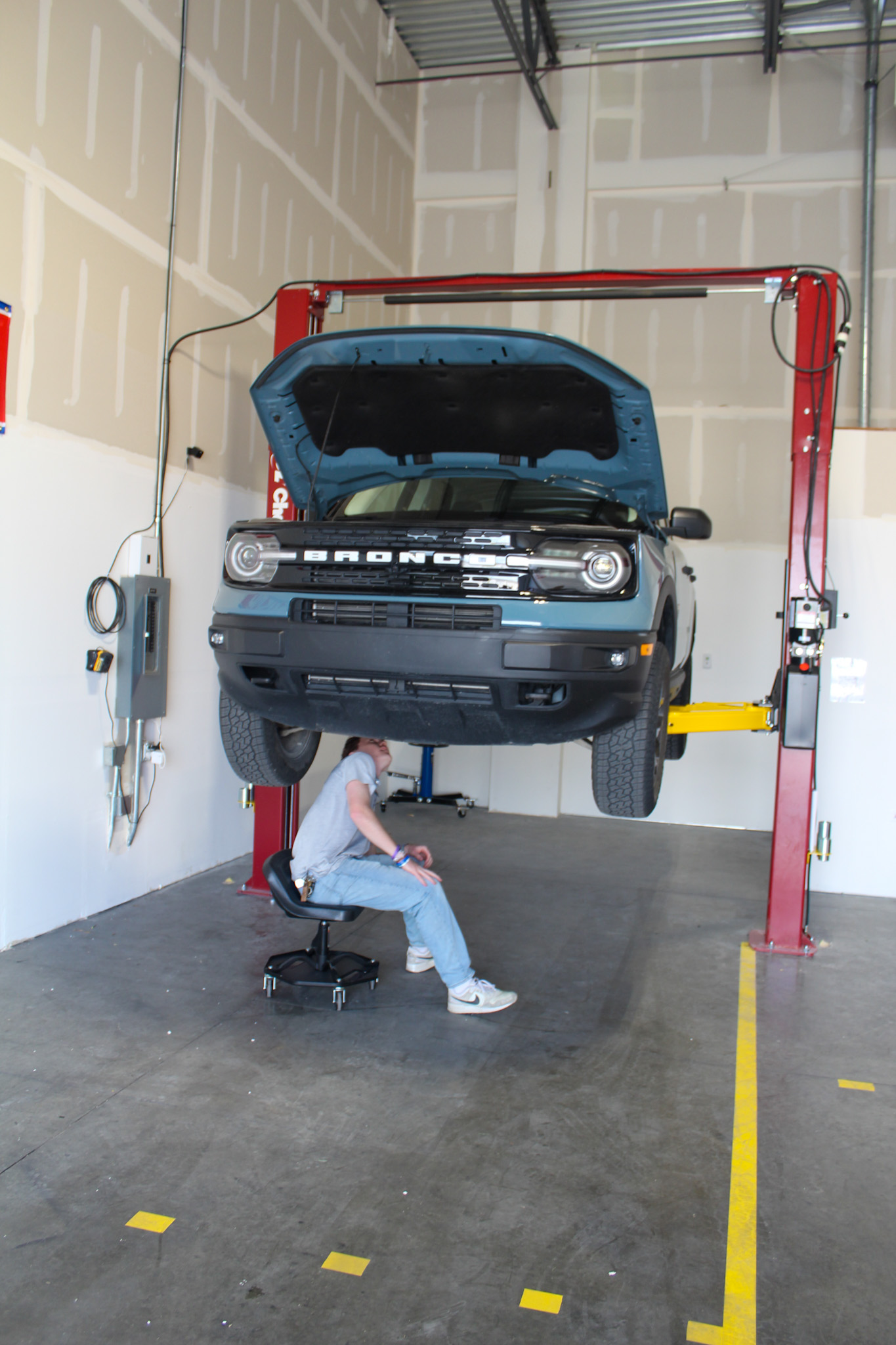
Run the same three-hour brake job through that rate and you land around $150 in a lift bay instead of $600 at a shop. That's not a marketing number, that's just $50 times three. Our full brake job cost breakdown walks through it line by line if you want to see where the shop's $600 actually goes.
The money's not the whole story
Honestly, a lot of people book a bay the first time purely for the price, then keep coming back for reasons that have nothing to do with saving $450. You set your own schedule instead of dropping a car off and hoping it's ready by five. Both locations run 24/7, so a 10pm slot after a late shift works as well as a Saturday morning. And you leave actually knowing what you did to your own car, which matters more to some people than it should.
There's a real learning curve the first time you're under a lift, which is exactly why we require the short safety video before anyone's first session. It's not a formality. Load points and lift safety are worth five minutes of your time before the car's six feet in the air.
Who this doesn't make sense for
If you've never changed a tire and the idea of diagnosing a check engine light yourself sounds miserable, a shop is still the right call, and that's fine. The FAQ page covers what beginners typically start with and how much mechanical experience actually helps. But if you've priced out a repair recently and the labor line made you wince, that's usually the moment people start looking at a bay instead.
Right now weekday bookings run 15% off Monday through Thursday, and you can change your reservation up to 24 hours out with no penalty. Check the full tool inventory to see what's on the wall before you book, then reserve a bay in Provo or West Valley City and see the difference for yourself.